
A few notes from the underground:
–I was surprised and happy this morning to be alerted to a new review of Becoming the Villainess:
http://www.rattle.com/ereviews/gaileyjeanninehall.htm
–The new issue of Calyx (Winter 2008) is out and this venerable Northwest-focused feminist journal published a poem I have some emotional attachment to, “My Little Brother Learns Japanese.” So check that out! Northwest poets Lana Hechtman Ayers and Jenifer Browne Lawrence have their books reviewed (very nicely!) as well.
–If anyone can tell me what language this is in, I’d be most grateful – they sent like 1000 hits to my site in one day? http://blog.b92.net/text/2077/Dani%20pozitivne%20energije/#k157270
(Thanks to Jilly – for telling me it is Serbian! You get the prize! (Prize to be named later…)
–I suspect some of my interests, such as robots and comic books, to be genetic: http://news.enquirer.com/apps/pbcs.dll/article?AID=/20080224/NEWS0102/802240361/1058/NEWS01
–Rachel Zucker’s Bad Wife Handbook. Have I mentioned it before? I liked it a lot and may either do an official review or just write about it at more length here. I read Zucker’s book and Matthea Harvey’s Modern Life together the other night out loud, just to do a little compare and contrast. Zucker’s writing looks more experimental, but is actually fairly straightforward; Matthea may seem straightforward, but writes in an emotionally charged but fairly oblique way (and is definitely influenced by the surreal movement more than Zucker.) By the way, both of these poets (on their third books now) are roughly around my age…should this make me feel like an underacheiver?
–I am on a new antibiotic which I think is robbing me of my brain. This leaves me with the intellectual energy to either read the new issue of “Health” magazine OR write a very bad poem.
–I was very happy “Falling Slowly” from the indie Irish muscial “Once” won an Oscar for best song. And I was happy Jon Stewart had the 19-year-old Czech singer back up on stage after the microphone rudely cut her off. Yes, I had the intellectual energy to watch the Oscars, and then write a bad poem.
A few notes on persona poetry
Someone asked if I would blog a little about persona poetry to make up for the fact that I missed giving a pedagogy paper on the same subject at AWP, so I will! It would be boring if I just posted the paper here, so I’ll write about why I personally like writing persona poems, how I discovered them, and why I think they’re useful in a classroom.
I really had not discovered contemporary female poetry until I was in college – Plath, Gluck, H.D., Atwood, Rita Dove and Lucille Clifton. I was engaged and enraptured. One thing I could not help but notice was how many of these writers wrote in personas: male and female, angel and demon, flower and stone, Gretel in Darkness and Helen of Troy as a stripper. Why, I wondered, had so many female poets taken up this strategy for writing? What did it do for them? What could it do for me?
One boundary that many women, at least in our society, feel is the boundary of being “nice,” and “likeable.” And many women poets write nice, likable poems about their nice, likable lives. But those poems did not interest me. The first time I read “Daddy” (which, by the way, I took to be a persona poem) I laughed out loud – I thought it was hilarious, unbounded; it was like reading a lightning storm. Gluck’s Meadowlands had a similar effect. Atwood, of course, practices the art of the tart-tongued villainess in her fiction and her poetry like nobody’s business.
So I wanted in. Tentatively I took steps towards various personas: my first were in the voice of Philomel, because at the time I was reading a lot of Ovid and TS Eliot (I think now that at least one of TS Eliot’s alter egos, or maybe is anima-self, was Philomel, the violated young girl who is a very strong presence in “The Waste Land.”) Then I explored more characters: Wonder Woman (a ubiquitous presence in my childhood), the wicked stepmother, mermaids and melusines.
Allowing me to write outside of the lines, so to speak, on the edges and fragments of story lines, was wonderfully freeing – here, I could make up the story and character as I went along. Why, I wonder, was persona poetry so attractive to me? And what benefits might it have for poetry students today?
Well, here’s my little list, in a nutshell:
–It gives poets some of the creative freedoms of the fiction writer: character and plot, mythic landscapes – to me, a much more fun place to play than say, my own backyard. Because I can only write so many poems about my own fascinating life.
Using our imaginations = good.
–It helps writers extend and exercise empathy for the “other;” it allows us to imagine what it’s like in other people’s shoes. This one’s pretty self-explanatory – you just have to get in the mindset of someone else to write a poem in their voice – and often, we surprise ourselves by really identifying with characters we thought we had nothing in common with. Expanding our own (and our students’) humanity, to put it grandly. If you don’t some empathy with the character you’re writing, the poem will sound false, incomplete. Again, this is an exercise in humanism and imagination. It’s harder to create an “us” and “them” when you work really hard to get into “their” mindset. Have a Democrat write a poem as a Republican; a girl write a poem in a boy’s voice; and of course, my favorite: assign them the task of writing (and humanizing) the villain of a story.
–It allows a writer to re-write history and mythology; any group that has been left out of the hero position for a long time has got to like that. Subversion isn’t just a graduate school catchphrase – it is a real and powerful tool to rebalance the world in our own writing, a way to challenge conventional thought, and a way to address issues of inequality. I recommend having students pick two opposing characters from a folk tale, comic book, or myth, and writing a poem in each voice. I’ve always gotten wonderful work, at least one really good poem, from this exercise.
–A last reason, which is really more psychological than anything else, is that writing in persona allows us to free the shadow self; any restrictions (or false memories) we might place on our autobiographical writing tends to disappear when writing in persona. Now, it doesn’t really protect the writer; after all, there’s a reason any writer chooses the speakers they do, and the emotions they choose to reflect are still aspects of their own selves. But writing in persona can trick us, momentarily, into freedom while we write.
Tomorrow: The actual persona poetry post. I promise!
Today:
Check out this New York Times review of Matthea Harvey’s Modern Life:
http://www.nytimes.com/2008/02/17/books/review/Orr2-t.html?ex=1360818000&en=d6f393afb926b4d1&ei=5124&partner=permalink&exprod=permalink
In it, the author takes a short look at the somewhat gloomy life of a young poet trying to break into the ranks of po-biz/academia and also makes a backhanded comment about the kind of post-avant style (see previous discussion on Harriet blog) that a lot of younger writers write in today. Otherwise, it’s a pretty positive review of the book, though I’m shocked and appalled that “Robo-Boy” makes no appearance, not even a brief mention! Best part of the book, babies.
Barn Owl Review came in the mail today, and I tell you, if I was going to edit a literary magazine, the poetry content is pretty much exactly what I would pick if I had the choice. Spooky! I recognized names from the blog-world, which I was sort of expecting, but: more strangely (this was a surprise to me!) there were at least four members of my regular poetry-group among the contributors, and two other Seattleite-friends. That’s got to be a Northwest-friendly prejudice of some sort, except that none of these writers write in a very Northwest-y way; just the opposite. I mean, of course I think these guys are all great poets, but it’s a nice surprise (and, a bit eerie) to be included with them in a journal! We could even do a reading to promote the issue together…Anyway, an exciting journal, fantastic poems, fantastic writers. And not just because I’m in it and my friends are in it. Very happy to see this out there in the world. Yay, Mary B and Sara and all the other editors who worked to make it happen.
I would mention poems I especially liked but I pretty much liked them all. And, trivia for any anime buffs: my poem “Autobiography” was inspired by a character from the cult-anime series Fooly Cooly.
In health news: After getting slightly better, I am getting worse again: fever up again, more symptoms, etc. I swear to God this is the neverending virus from Hell. The good news? Tomorrow is supposed to be upper-fifties and sunny. I vow to go outside even if it kills me. I miss the outside world! Fresh air! Trumpeter swans! The cold cold Pacific ocean!
Happy Valentine’s Day!
Still recovering from the flu here, but thought I would share one of my favorite ever love poems. A great, great last line here, I think. And anyone who knows me well knows why this poem might be close to my heart. (Another favorite: e.e. cumming’s “somewhere I have never travelled.”)
Love Poem
By John Frederick Nims
My clumsiest dear, whose hands shipwreck vases,
At whose quick touch all glasses chip and ring,
Whose palms are bulls in china, burs in linen,
And have no cunning with any soft thing
Except all ill-at-ease fidgeting people:
The refugee uncertain at the door
You make at home; deftly you steady
The drunk clambering on his undulant floor.
Unpredictable dear, the taxi drivers’ terror,
Shrinking from far headlights pale as a dime
Yet leaping before apopleptic streetcars—
Misfit in any space. And never on time.
A wrench in clocks and the solar system.
Only with words and people and love you move at ease;
In traffic of wit expertly maneuver
And keep us, all devotion, at your knees.
Forgetting your coffee spreading on our flannel,
Your lipstick grinning on our coat,
So gaily in love’s unbreakable heaven
Our souls on glory of spilt bourbon float.
Be with me, darling, early and late.
Smash glasses—I will study wry music for your sake.
For should your hands drop white and empty
All the toys of the world would break.
Seriously, just kill me now…
So, another urgent care visit confirms I’ve got an ear infection and am now testing positive for flu type B (which I didn’t have before – at least not as of two weeks ago when I was tested then – AND I got the flu shot this year! So much for preventative measures.) So, after three weeks of various germs, even more newer and more exciting germs. Honestly. I have some patience and fortitude, but even I have my limits 🙂
On the plus side, the sun has finally graced my little town with its presence for the first time in over a week. So I’m gonna go shiver and be all ache-y-and-ah-choo-y and drink fluids and lie down in a sunbeam now.
And thanks for your good wishes and congrats! It really cheered me up while I’ve been all sickly.
Aren’t you glad I didn’t end up hanging out with you at AWP? Just think of all the problems you avoided! Anyway, glad to have all the blog reports on the conference to read now, although it sounds like a lot of you got sick even without me bringing my evil! You all take care, wrap up in warm blankets and rest. And remember to spill all the best gossip!
(Update: Thanks to Eduardo, I have the link to this AWP blog, hilarious! Now I know bronchitis IS the writer’s disease! http://awp2008.blogspot.com/)
For those of you who read this blog for poetry-talk – I promise I’ll get back to work soon. Someone asked me to talk about persona poetry and so I will!
PS Have I mentioned that I think AWP should be held during the healthier, sunnier portion of the year, or maybe in a happy, healthy, sunny place – like Arizona or Honolulu.
And, to read more discussion of the “can’t all poets just get along and not label each other and fight” subject, check out this post and the comments…
http://poetryfoundation.org/harriet/2008/02/who_you_callin_postavant.html
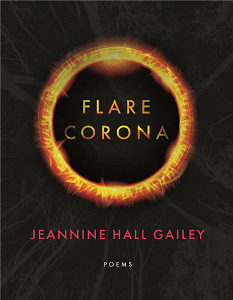
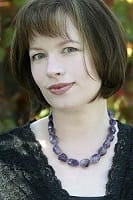 Jeannine Hall Gailey served as the second Poet Laureate of Redmond, Washington and the author of Becoming the Villainess, She Returns to the Floating World, Unexplained Fevers, The Robot Scientist’s Daughter, and winner of the Moon City Press Book Prize and SFPA’s Elgin Award, Field Guide to the End of the World. Her latest, Flare, Corona from BOA Editions, was a finalist for the Washington State Book Award. She’s also the author of PR for Poets, a Guidebook to Publicity and Marketing. Her work has been featured on NPR’s The Writer’s Almanac, Verse Daily and The Year’s Best Fantasy and Horror. Her poems have appeared in The American Poetry Review, Poetry, and JAMA.