- At January 25, 2008
- By Jeannine Gailey
- In Blog
 2
2

Is it that time already? Where I’ll be at AWP:
Thursday morning, 10:30-11:45 at the Bookfair at the Steel Toe Books table #436
Signing books with Superstar Steel Toe author Mary Biddinger
Friday morning, 9 AM (early!)
Giving a little Pedagogy on the persona poem at the Poetry Pedagogy Forum
After that? A few readings, some fun times, maybe a museum or two…a trip to SoHo…bookstores…let me know if you’re doing anything fun and you think I should be there! Looking forward to meeting you there!
- At January 25, 2008
- By Jeannine Gailey
- In AWP NYC
- 2
Is it that time already? Where I’ll be at AWP:
Thursday morning, 10:30-11:45 at the Bookfair at the Steel Toe Books table #436
Signing books with Superstar Steel Toe author Mary Biddinger
Friday morning, 9 AM (early!)
Giving a little Pedagogy on the persona poem at the Poetry Pedagogy Forum
After that? A few readings, some fun times, maybe a museum or two…a trip to SoHo…bookstores…let me know if you’re doing anything fun and you think I should be there! Looking forward to meeting you there!
Hey everyone! Thanks for the intriguing discussion in the comments section of my last post. Maybe I’m just too much of a can’t-we-all-just-get-along idealist. As Dorianne Laux said, “Schools are for fish!”
Anyway, I’m neck deep in working on a rush-deadline freelance piece and battling tonsillitis and the below-30 temps (I know, but it’s cold for the Pacific NW!) so instead of making up my own post, I’ll post something from Jilly’s blog, a subject near and dear to my own heart:
“So what’s the deal? Why do the mainstream media hardly ever do articles or reviews about women poets? It is often hard to find ANY article to link to.
Are there more men poets than women poets? (When I got my MFA, the poetry students were mostly women.) Are men poets simply better poets than women poets? More interesting? Better at self-promotion maybe? Do articles in which the subject has a penis make for increased sales or something? Are men poets more likely to get published by a large press? What? Is? The? Deal? Here?”
To comment at her blog, click here! Kelli continues the discussion here.
And, Paul Guest is famous. And not just “poetry” famous. Check it out!
Plus, today, I saw a flock of trumpeter swans. Please post any homemade remedies for tonsillitis in the comments. I cannot take any more antibiotics, seriously, or I’ll turn into a superbug myself.
Why is it good things, like bad things, always come out of the blue? It always makes me feel ill-prepared, in some way. Like I haven’t been paying attention to the signals. But I am grateful. Always.
I don’t understand some of the intolerance I read in books of essays and blogs towards poetry different than one’s own. Poetry does not have to be all one thing or the other. I’ve never, in all the years I’ve spent reading, studying, writing poetry thought to myself: “All other writers should write like me; otherwise, they are bad writers. I know the true way and everyone else is on the outdated/outmoded/too conservative/too experimental path.” Whether you write plain-spoken narrative, curvilinear lyric, Shakespearian sonnets, or some experimental-explosion or surreal prose poem, you are all welcome to the house of poetry. Anyone who labels “the other side” – or even claims there is an “other side” – I just don’t understand it. Why is it not all right to be avant-garde, lyric-narrative, stream-of-consciousness, whatever a person wants to be etc? Why must Ron Silliman paint a big broad box called “School of Quietude” and lump everyone who doesn’t write like he does into it? Why all the snide remarks about the “other?” Donald Hall does it too. “McPoems written by MFA students are bad; therefore, implicitly, I am good.” Fights about schools of poetry – is this a guy thing? Tell me what you think. Because I see it a lot in men’s blogs and men’s essays.
I have a stack of books by my bed, books I love – by writers who write different ways about different subject matters. Some are books from different countries, from people who speak other languages, people with different backgrounds and heritages and ways of speaking. How can embracing the diversity which is the world of letters be bad? Bad for my soul, bad for writing, bad for the brain and body? Yes, there will always be boring, poorly written poetry, or just poetry that doesn’t move or excite you. But how do you know for sure which books these will be, just by looking at the groups of people the author hangs out with, or the publisher, or the way the words are arranged on the page?
I love getting review copies because maybe one book, a book I might not have picked up on my own, by turning to it I will turn a key in my brain and something new will be brought in. Am I the only poet that thinks this way? It’s always a disappointment when you don’t connect with a person’s collection, but on the other hand, what a wonderful suprise when you connect with someone you didn’t expect! What a shame to miss out on a wonderful poet because of some ridiculous prejudice, right?
That is my rant of the day. A rant of open-mindedness, of embrace, of, dare I say it, loving your (poetry) neighbor. That is all. End rant.
I woke up this morning bright and early at 8 AM feeling (Dare I say it?) better! I’m not coughing, I don’t feel like my head is six feet underwater. I felt like singing. Instead, I’m going to be cautiously optimistic and try not to overdo things (I have a tendency to go into overdrive after I’ve been sick to catch up on things, which usually results in getting re-sicked.)
The sun was shining outside (although it’s about 30 outside) and although there’s been no poetry mail lately, I’m feeling cautiously optimistic about that too. I had a dream that I was carrying around four babies in my arms, showing them off to everyone.
Tonight, instead of watching Idol, I’ll be watching the Michigan primary…I’m on a politics kick lately.
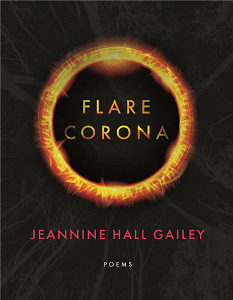
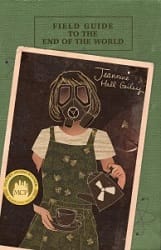
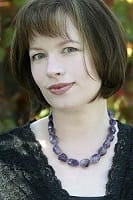 Jeannine Hall Gailey served as the second Poet Laureate of Redmond, Washington and the author of Becoming the Villainess, She Returns to the Floating World, Unexplained Fevers, The Robot Scientist’s Daughter, and winner of the Moon City Press Book Prize and SFPA’s Elgin Award, Field Guide to the End of the World. Her latest, Flare, Corona from BOA Editions, was a finalist for the Washington State Book Award. She’s also the author of PR for Poets, a Guidebook to Publicity and Marketing. Her work has been featured on NPR’s The Writer’s Almanac, Verse Daily and The Year’s Best Fantasy and Horror. Her poems have appeared in The American Poetry Review, Poetry, and JAMA.