- At September 29, 2005
- By Jeannine Gailey
- In Blog
 3
3

Some non-health related poetry news:
Check out Kelli’s poem up on Verse Daily today. Hooray for Kels! Also, hooray for American Poety Journal, who seems to have some magic, Verse-Daily-attracting energy going for them, besides the fact that I love them.
Before I got all sickly, I got to see Kim Addonizio read from her new novel, Little Beauties. A surprisingly touching, well-written novel. And Kim just is the definition of “poet I want to be like when I grow up.”
And, during all this bedrest of the past couple of weeks, I finally managed to acquire a copy of the new BAP 2005. And, besides the fact that there are like 5 dead poets in it (Bukowski? I mean, I like the dead poets themselves, and don’t mean to be a drag, but BAP should focus on the living!) I think this is my favorite BAP in years. A lot of the poems are fun, fun, fun to read. Victoria Chang’s poem is one of my favorites from her book, Circle, and I love the poems by Beth Ann Fennelly, Mary Ruefle, and Brigit Pegeen Kelly. I also liked Lehman’s discussion of populism versus elitism in poetry, and I’ve pretty much been a fan of Muldoon’s for a while, especially Hay. Anyway, very happy with my new purchase. Am also researching C.K. Williams and the influence of mythology on his writing.
Also, heard from my illustrator – a draft version of the cover art should be ready in a week or two. I’m holding my breath!
- At September 22, 2005
- By Jeannine Gailey
- In Blog
- 5
Cranky. At the ER last night, had a 102 fever, allergic reaction to an antibiotic and a kidney infection. Though they were giving me big doses of narcotic painkillers, and I was in huge pain and so out of it I was hallucinating, I stopped the nurse three times from giving me doses of medicine in my IV that I had stated when I first came in that I was allergic to. The resident came in and apologized an hour later, oh sorry, I should have known. Yes, you should have. Note: go to the ER with someone who knows your drug allergies and have them watch the nurses doing the IV drips like a freakin’ hawk.
- At September 15, 2005
- By Jeannine Gailey
- In Blog
- 1
Update: Whine deleted. Wonderful husband fixed car. Stayed in because (re: deleted whine) sick, and as a result, finished several assignments and read Anne Carson’s The Beauty of The Husband, which I liked but not as much as I liked Autobiography of Red. Wrote three poems. All in all, blessings and more blessings, many things to be grateful for.
Also, scheduled first official book reading for my and Martha Silano’s books debuting from Steel Toe Books next year: June 22 at Open Books in Seattle. Afterwards, some kind of party will be planned. Possibly with free cupcakes.
But onto people with real problems. Southeast Review and Southern Review are both asking people to send checks for Katrina victims in exchange for issues of their magazines.
- At September 10, 2005
- By Jeannine Gailey
- In Blog
- 4
This just in: Poetry News Headlines
Just wanted to let any Haiku fans in the audience know about this:
Haiku North America – a weekend conference – Sept 21-25 at Centrum Center for the Arts, Port Townsend, WA. Register and find out more at http://www.centrum.org/index.php?page=Haiku-North-America-Conference
Also, Wendy Wisner’s Epicenter is subversively dark around the edges, elegant and spare in a way that reminds me of Louise Gluck, and definitely worth a second and third reading. Brava Wendy!
My friend Ronda Broatch is launching her new chapbook from Finishing Line Press tonight. Congrats!
And congrats to Deborah and Suzanne and thier fabulous new babies!
Not poetry-related, but hilarious: When my hematologist brought in a diagnostic pathologist to meet me this week and talk about all my weird health anomalies, I made a side-joke as she expressed her surprise at my many low-probability genetic-mutation-related anamolies – “Yes, any day now I expect to be getting my superpowers.” And she said? “Like the X-Men?” Finally, a doctor who gets my comic book references! Plus, she was tall and looked like Famke Janssen. If I was a guy and not happily married, I would have asked her out right there.
- At September 07, 2005
- By Jeannine Gailey
- In Blog
- 1
Got Wendy Wisner’s Epicenter in the mail today – can’t wait to read it! Probably at one of the four doctor’s appointments I’ve got scheduled in the next seven days. Ah, poetry – the best thing to have in a waiting room, along with those “homey” touches like fireplaces and aquariums I’ve noticed popping up in the last five years. I do like the fireplaces, actually – the air conditioning always makes the labs freezing, so it’s nice to warm up. Let me point out that due to all the health problems I’ve been having, my latest romantic television crush is the star of the tv show House. I have dreams where he’s my doctor, he solves all my problems, and then I rush into his arms. Pathetic, huh?
Good news from my mom – thanks for everyone who sent their well wishes – it turns out the surgeon got all of the cancer on the first try, it hadn’t spread all that much, and the cancer wasn’t the bad type – melanoma – that they were worried about, only basal cell carcinoma. Still she had to have part of her face reconstructed because it had grown so much before they caught it. She’s already looking much better – my dad has been sending pics of her progress every day since the surgery. She’s one of those fair skinned blondes that burns every time she walks outside. My husband is too, so now I’m going to just buy them both tubs on high-powered sunscreen and hats at every holiday opportunity.
And got news today that my MFA program (from which I’m currently on a semester-long leave of absense b/c of health stuff, but to which I plan to return in January) is not going to fall apart as previously feared, the college is going to continue the program and possibly even make it better.
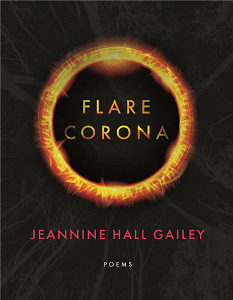
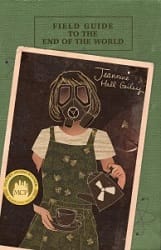
 Jeannine Hall Gailey served as the second Poet Laureate of Redmond, Washington and the author of Becoming the Villainess, She Returns to the Floating World, Unexplained Fevers, The Robot Scientist’s Daughter, and winner of the Moon City Press Book Prize and SFPA’s Elgin Award, Field Guide to the End of the World. Her latest, Flare, Corona from BOA Editions, was a finalist for the Washington State Book Award. She’s also the author of PR for Poets, a Guidebook to Publicity and Marketing. Her work has been featured on NPR’s The Writer’s Almanac, Verse Daily and The Year’s Best Fantasy and Horror. Her poems have appeared in The American Poetry Review, Poetry, and JAMA.