- At September 01, 2005
- By Jeannine Gailey
- In Blog
 5
5

Prayers and good thoughts to those affected by Katrina. I was happy to hear from most of my friends in Mississippi and Alabama and they were safe and sound, though most of them without power.
My personal favorite place to donate is Northwest Medical Teams – http://www.nwmedicalteams.org/
They spend a majority of their donations on actually helping people, as opposed to administration.
Also I’m asking for good thoughts for my mom, who just found out a small tumor on her face was malignant.
(update: check out an interesting blog on the “leadership” surrounding this disaster from a woman in the air force: http://kimponders.blogspot.com/2005/09/too-important-to-be-left-to.html
Then, check out one of our own blogger poets, who has been documenting her experiences in her blog: http://cochondelait.blogspot.com/
Also, if anyone buys my chapbook from me this month or next, I’ll donate all proceeds to hurricane charities, either the Red Cross or the Northwest Medical Teams.
And thanks to Jeffery Bahr’s software company, who was matching donations…)
- At August 28, 2005
- By Jeannine Gailey
- In Blog
- 8
Preparing for onslaught of in-law visits for three weeks. Working feverishly on the MS for its final version, writing “end notes” for poems with obscure references, getting rid of lines that aren’t working, trying to fix missed punctuation, and all that. Found out that I have a rare genetic condition that results in something called “PAI-1 Deficiency,” which is a bit like a mild case of hemophilia. It means blood clots are continually broken down, instead of building up enough to stop any bleeding completely. This results in a bad situation when you go in for say, minor surgery or have minor head trauma. Which means that I get to try some new drugs, like something called “Amicar.” Sounds like Amway for Cars. Fun for me. Anyway, let me sing the praises of the Seattle Cancer Care Alliance once again. Very humane treatment, and smart, tenacious doctors. Who give you their e-mail addresses. My little brother has to be tested for this genetic mutation too. He runs a Shaolin Dojo, so he’s much more at risk for, say, sword injury than I am. I stay away from the swords and the kicks to the head in general.
Someone mentioned short poems, so I thought I’d post my latest poem, which was inspired by a USA Today headline:
“Disney Hopes Fairies Will Fly Into Girls’ Hearts”
Imagine: their sweet little hearts glutted
not by blood and plasma but fairies,
flitting about the ventricles, their wings
benign but dangerous as scalpels.
Also got to see Ben Folds and Rufus Wainwright perform this weekend. The highlight was when they sang a duet version of a Wham song, I think it was Careless Whisper. Hilarious, although most of the crowd just seemed perplexed. From the side, Rufus looks like a more slender Kevin Sorbo.
This is the artist that I’m working with for the cover of Becoming the Villainess. Here’s her web site – click on “Illustration” to see examples of her work. Quite the genius, and a lovely person as well. www.michaelaeaves.com My favorite pics are the girl with the skeleton and the fairy-tale looking gnome castle.
And a quiz: what’s your favorite film with a female superhero? Spy girls count as superheroes, as do crime fighters.
- At August 23, 2005
- By Jeannine Gailey
- In Blog
- 7
Feeling very grateful for things…
The last ten days have brought a lot of good news. First the call from Steel Toe Books that after 24 months (almost exactly to the day) of sending out my MS, Becoming the Villainess will really be a real live book next spring, complete with little Kentucky-oriented book tour. Then my husband found out he had been promoted at work, then my “blood doctor” called with the news that, after six months of testing, they finally, in the latest set of blood tests, had pinpointed my bleeding disorder and have suggested treatment for it. I won’t know the results or treatment til i visit the research center on Thursday, but still, this is very good news for me and my veins which have been having weekly draws for months now and were starting to complain.
So, on top of all this, this morning I wake up and read The Pedestal Magazine’s newsletter, and low and behold, they’ve done a review of my chapbook, Female Comic Book Superheroes. What nice news to start the day with!
Needless to say, I am ready to be nice to random old ladies, give to charity, and otherwise follow the grateful, happy poet path. And, you readers, have also made my life better by being so encouraging all the way. I owe everyone cake. So when you see me, demand cake. Or a hug. Frankly, I’m just feeling disgustingly wonderful towards everyone I meet.
- At August 17, 2005
- By Jeannine Gailey
- In Blog
- 20
Just got back from the Reel to Read reading at On the House, which was a blast! Had some old friends show up unexpectedly (thanks, Lana and Colleen!) and the other readers, hip and funny Besty Aoki (who had on great boots – you should have seen them, R. Loudon) and Derek Sheffield ,were fun to listen to. And, people actually bought chapbooks – thanks everyone! – which always makes you feel loved and appreciated. The space was really relaxed and easy, and the organizer, Larisa, very professional. So I recommend the reading series to one and all.
Onto the good news I’ve been promising:
I got a call Sunday from the publisher of Steel Toe Books in Kentucky. They have offered to publish “Becoming the Villainess” next spring. So, bookbookbookbookbookbook, yaay! I’ve been scrambling around to find cover art already.
Also, in a strange twist of fate, they are also publishing a friend of mine’s manuscript, Martha Silano. Kentucky readers love Seattle girls? Who knew?
That is all. Except, can anyone tell me whether I’m supposed to withdraw poems from lit mags if they are in the manuscript that’s coming out next spring, or send a letter, or what?
Full moon. Glenn took me out for duck confit after the reading to celebrate, and I bought chocolate-covered madeleines. Several good days in a row. Also, several paying assignments have flowed in. So perhaps this year, after six or seven or eight months of not-so-much-goodness/surgery/health problems/etc, will tilt in my favor after all.
- At August 16, 2005
- By Jeannine Gailey
- In Blog
- 1
Here’s where I’ll be tomorrow night…http://www.poetryfestival.org/reel_to_real.php
Jeannine Hall Gailey will be reading poems about female comic book superheroes, biblical heroines, and why there are so many dead girls in movies…with Betsy Aoki and Derek Sheffield at 7:30 PM 8/17 at “On the House” in Capitol Hill, Seattle. Live poets and videopoems!
Be there or be square.
News still forthcoming…
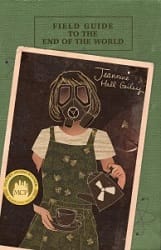
 Jeannine Hall Gailey served as the second Poet Laureate of Redmond, Washington and the author of Becoming the Villainess, She Returns to the Floating World, Unexplained Fevers, The Robot Scientist’s Daughter, and winner of the Moon City Press Book Prize and SFPA’s Elgin Award, Field Guide to the End of the World. Her latest, Flare, Corona from BOA Editions, was a finalist for the Washington State Book Award. She’s also the author of PR for Poets, a Guidebook to Publicity and Marketing. Her work has been featured on NPR’s The Writer’s Almanac, Verse Daily and The Year’s Best Fantasy and Horror. Her poems have appeared in The American Poetry Review, Poetry, and JAMA.