Welcome to the Big Dark—Halloween Costumes and Cats, Hanging with Poet Friends, When You Contemplating Quitting (Poetry, etc) and End Times Mindsets, Bonus Bobcat
- At November 05, 2023
- By Jeannine Gailey
- In Blog
 3
3

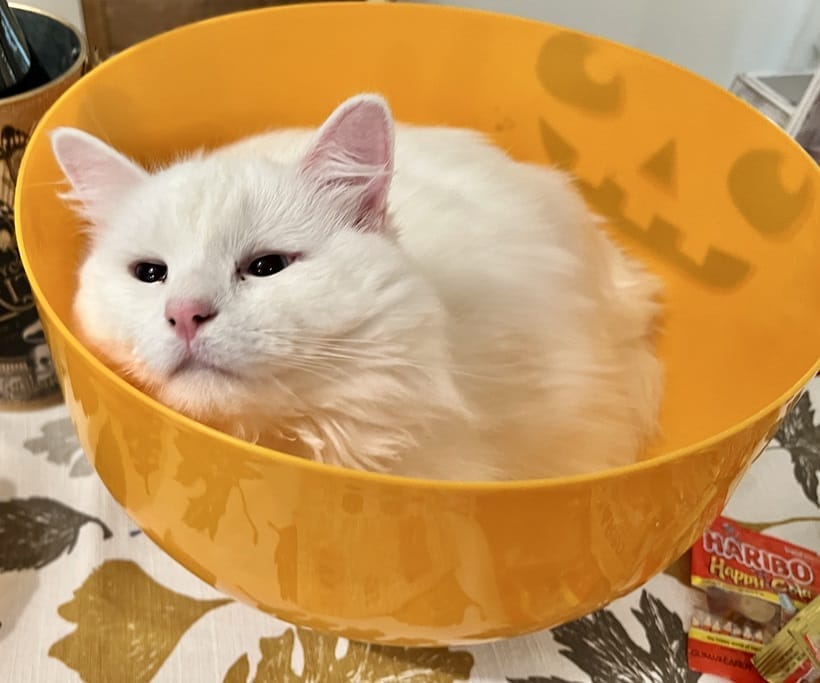
Cat disguises self as Halloween candy
Welcome to the Big Dark!
Seattle welcomed—or, grudgingly accepted—the Big Dark last night, when the time change brought us dark mornings AND dark afternoons, and dark all the time in between. Plus, a week of power outages, rain and windstorms! You can see why Seattle-ites—even non-sunworshippers like myself—can suffer from depression this time of year.
Fortunately, the storms waited until after the trick-or-treaters on Halloween! You can see this picture of Glenn and I dressed up as Barbie and Ken (below). I couldn’t attend the Barbie movie premiere in person because my immune system (I was still being fairly protective because of some antibody infusions I was getting) so we brought the props home—a little child-size Barbie box and Glenn looking legit like Western Ken (sans fringe).
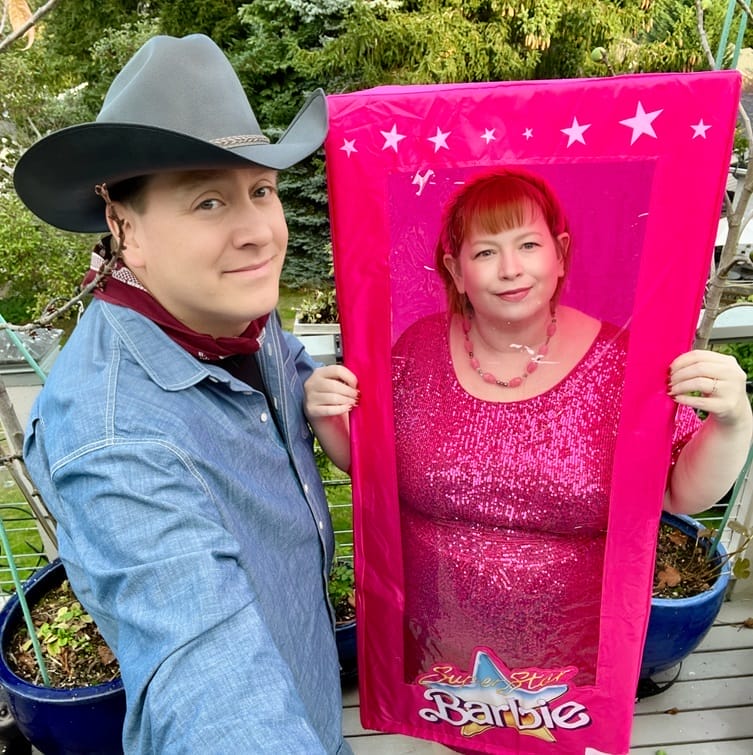
Me as Barbie and Glenn as Western Ken
Plus, this cat was trying to escape disguised as Halloween candy. No good, Charlotte! We saw right through your schemes! We did get a lot of cute trick or treaters this year, which is always fun and we took the rest of our candy to a local winery that donates Halloween candy to the troops, which seems much better than Glenn and I eating it.
The weather also mercifully held out until my poet friend Kelli Russell Agodon and her husband Rose got on the ferry back to their home, after their visit out to see us and do some local celebrating at Woodinville’s Molbaks, which does some fantastic holiday display stuff (as you will see in pictures later in the post).
Because we visited the very day after Halloween, they didn’t have ALL the holiday decorations up yet—missing some lights and a huge poinsettia tree that was up two days later.
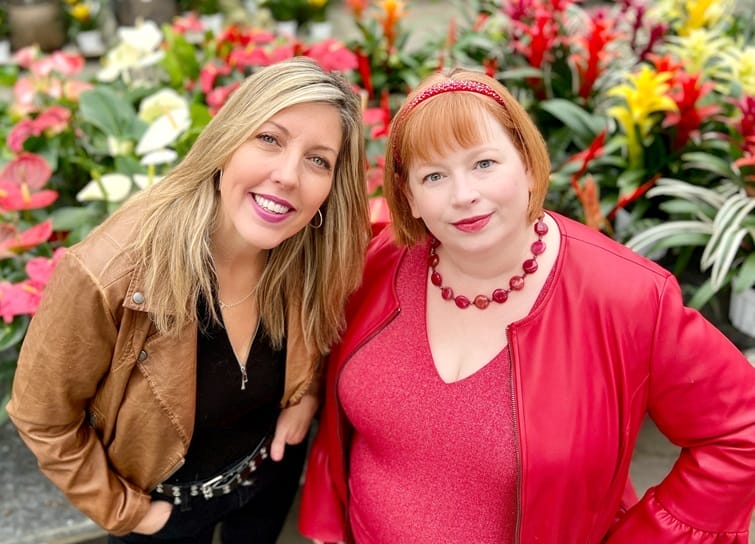
Kelli Agodon and I with tropical plants at Molbaks
Hanging with Poet Friends
One thing I’ve been trying to do is make time to see friends in person—at three and a half years and counting, it’s been a long pandemic—and this week my friend Kelli and her husband made the long trek from over the water to see Glenn and me. Glenn provided a delicious brunch, we had sparkling wine from a local winery, and then we went adventuring at the aforementioned home and garden store famous for its over-the-top holiday decor—like $1100 stuffed display polar bears, oversized trees, camping scenes, holiday pastel bakery scenes. Hey, when you’re trying to stave off Big Dark (not to mention, horrible news all day everyday) sometimes you’ve got to do some crazy things. It is really good to see people we love in person. Kelli and I got to talk a little shop too—about writing, making money, survival as a poet, book sales during a pandemic, and more.
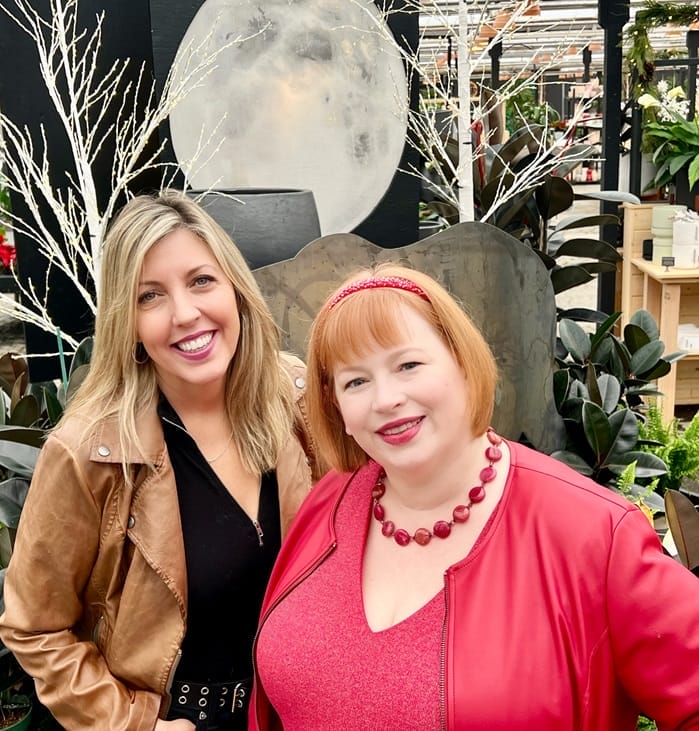
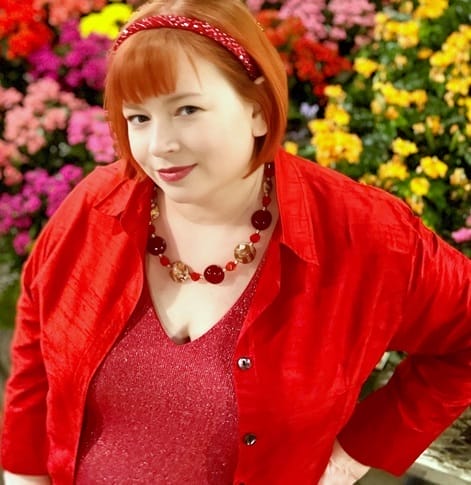
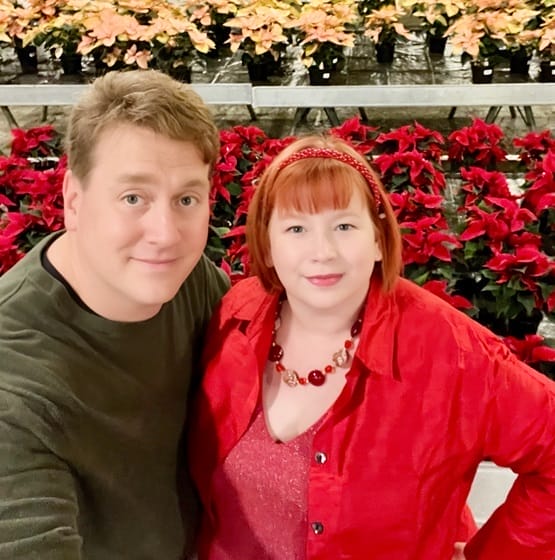
So below, another pic of Kelli and me, and then two pics of Glenn and I two days later at Molbaks’ holiday party because yes, that’s how much I like being around flowers in November.
-

- Kelli and I with winter moon scenery
-

- posing with flowers
-

- Glenn and I with poinsettias
When You’re Considering Quitting (Poetry and Etc)
I had the sad news today that Tom Holmes was quitting his quirky-but-fun poetry magazine that I’ve been a fan of for years, Redactions—and that’s the news after a couple of high-profile lit mags went down this week. Funding is being pulled, universities are laying off staff left and right, and lit mags are struggling. The poetry world in general is struggling, maybe just here in America, but it feels like maybe this is a larger phenomenon. People in general are struggling to feel hopeful. This made me think about mindsets of writers in the past. T.S. Eliot wrote his classic “end of the world” poem “The Waste Land” in 1922 – he hadn’t even been through the Great Depression or WWII yet!
I recently read Agatha Christie’s Hallowe’en Party (the book on which the recent movie Haunting in Venice is loosely based – free on Hulu right now, FYI). It was written in 1969, right after the UK took away the death penalty for murder, a change that Christie – a woman who, might I remind you, successfully faked her own death when she found out her first husband was cheating on her and obsessively read crime news articles – thought was definitely signaling moral decay and even an end to civilized society. (Hey, stuff was weird in 69—the first lines of the song “Beeswing” are “they called it the summer of love—they were burning babies burning flags the hawks against the doves”—sound familiar?)
When Virginia Woolf took her own life at the midst of WWII, her house in London had just been bombed and she legitimately thought the Nazis were going to win and come and kill her husband (who was Jewish). Did England at the end of 1941 feel like end times? I bet it did. Add to that health problems and mental health issues, and it became too much.
Sylvia Plath and Marilyn Monroe took their own lives way too young, both thinking they were somehow “over the hill” (!!) and looking at themselves as failures, when years later we still see them as legends. It is a shame neither lived long enough to see how long their legacies would last. If they’d only held on a little longer, maybe they would have known more about their own success, their impact?
It is easy to lose hope. Little and big things—the weather, current events, job and money anxiety—can make life seem that much harder for people who were already struggling. Be sure to reach out to your loved ones and make sure they are doing okay. Be extra kind to the people around you, if you can be. I am a girl who thinks about endings a lot—I mean, I wrote a book that was published a few years ago all about the end of the world, and that was BEFORE the pandemic, Trump, the recent wars in the Ukraine and the middle East.
This year, I turned 50, and I guess I am feeling a bit of the midlife crisis they advertise – that is, questioning my life’s work at this point, wondering why I haven’t been able to pay off my student loans yet, wondering if poetry is something I should continue doing, worrying over the dwindling numbers of poetry mags and book sales. Should I do something that makes more money but that I hate? My health problems at this point probably make working a “normal” job impossible, but taking disability—which some of my family members have advised, given how little money I’ve made in the last couple of years—seems extreme at this point. (Plus, dealing with lawyers and paperwork are two of my least favorite things—I barely apply for grants and residencies as it is because I will do anything to avoid paperwork. That they ask sick and disabled people to jump through so many hoops to get payments that would barely cover my grocery bill is another whole problem. The average wait time in this country to get disability is six years.)
I love art. I love encouraging and mentoring people, but teaching full time—which is the way many poets and writers make their living—seems not likely at this age. (Multiple degrees, and eight books, what do I have to show for it besides a lot of debt? Sigh, sigh.) I could do a part-time low-residency job, but those are few and far between. I’m told I’m good at editing, which I could do part-time, but honestly, it takes a lot of brain power and MS has made it harder than it used to be.
All this is just to say, how do we decide when it’s time to quit—a job, a relationship, or even a passion for an art that just doesn’t seem to be thriving the way we wish it would? I’ve quit poetry twice during my lifetime—in my middle twenties, right after my MA when I decided the poetry world was too corrupt and became a tech writing manager for a dozen years instead, and in my thirties, when I struggled to get my first book—the one that became Becoming the Villainess—published. My love of poetry and desire to do it has flared up intermittently—the two notable times, when I had double pneumonia and was living in California, struggling to pay regular bills, at the hospital on several IVs and oxygen and thought “I can’t die—I haven’t published my second book yet!” and again when I was diagnosed seven years ago with terminal cancer and thought “I can’t die—I still have more poems to write!” Every single decision we make in life has an impact—where we live, whom we live with, what we choose to do for a living, who we hang out with, how we vote, even adopting an animal, taking on volunteer work for a charity—and sometimes it’s good to have moments when we look hard at our current situations and ask: is this right for me, right now?
Anyway, I certainly don’t have all the answers. If you are a writer and questioning whether you’ve made the right decisions, I understand. Just remember we’re not always the best judges of whether or not we live in “end times” or whether or not we’ll be considered “failures” down the line. Don’t give up too easily. I am saying that to you and to myself. Maybe there are good things right around the corner.
And if you’ve made it this far, just for a little anti-darkness cheer, here is a real-life video from this week of a baby bobcat on my back porch. I mean, baby bobcats! Or bobkitten, if you will!
Happy Halloween! Spooky Season, Spooky Poems, Spooky Reading, Upcoming Speculative Reading
- At October 30, 2023
- By Jeannine Gailey
- In Blog
- 0
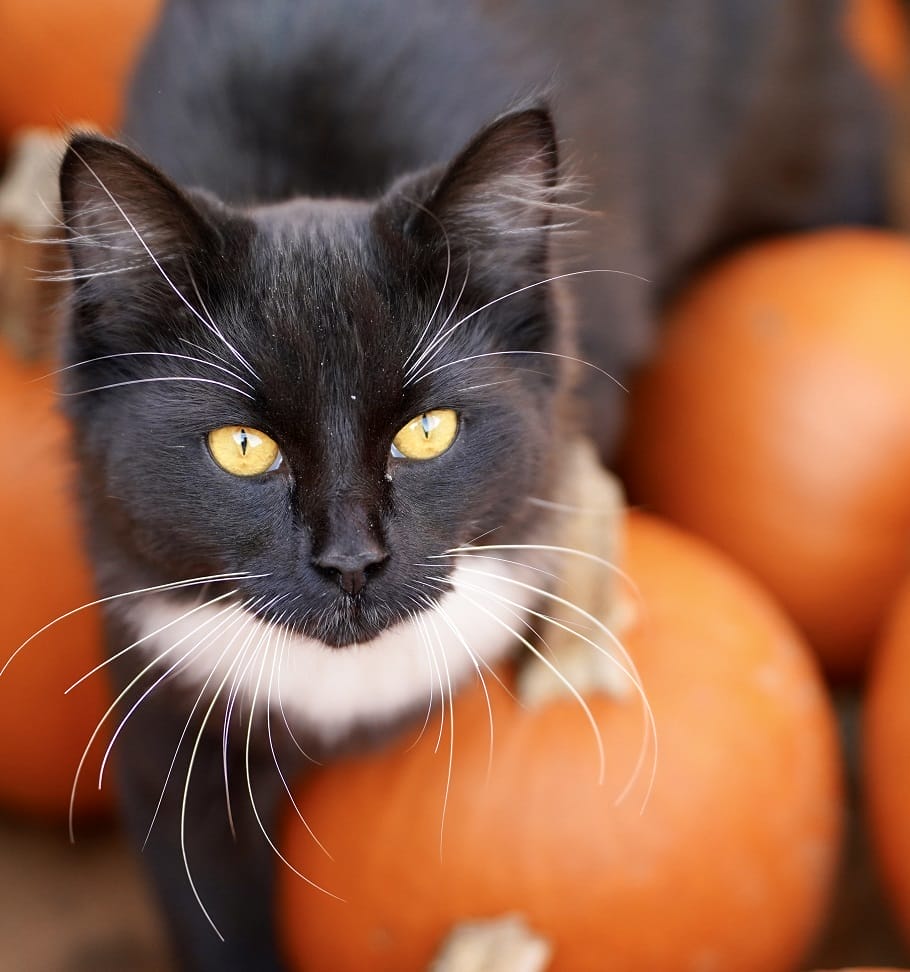
Kitten with pumpkins at local pumpkin farm
Happy Halloween! Spooky Season, Spooky Poems, Spooky Readings!
Happy Halloween! I bet a lot of you have already bought your candy, pumpkins, etc and maybe even gone to a Halloween party or two. My husband is a big Halloween fan, and the news (and social media) has been so grim lately, we’ve been trying to create some joy around us. We had two nights of record cold temperatures that knocked out the last of our garden’s flowers and froze our bird baths overnight. We had a lunar eclipse this week and the moon has been rising orange at the edge of the sky.
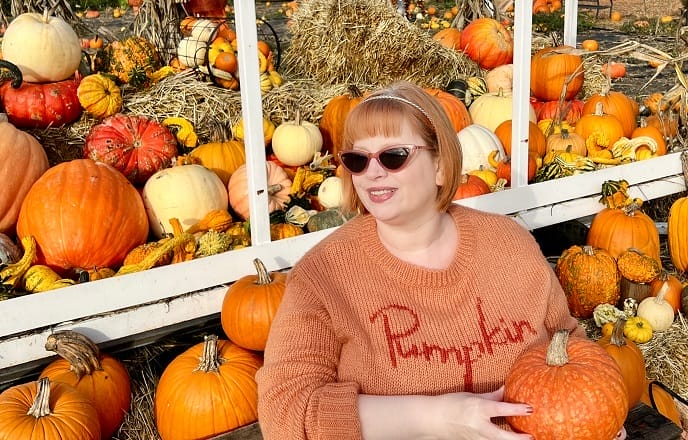
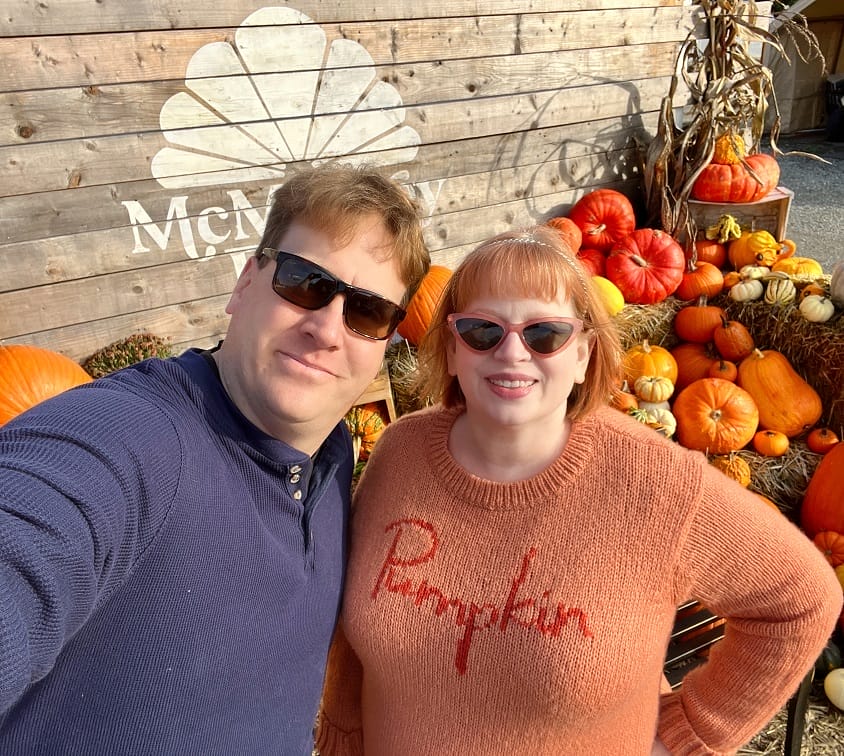
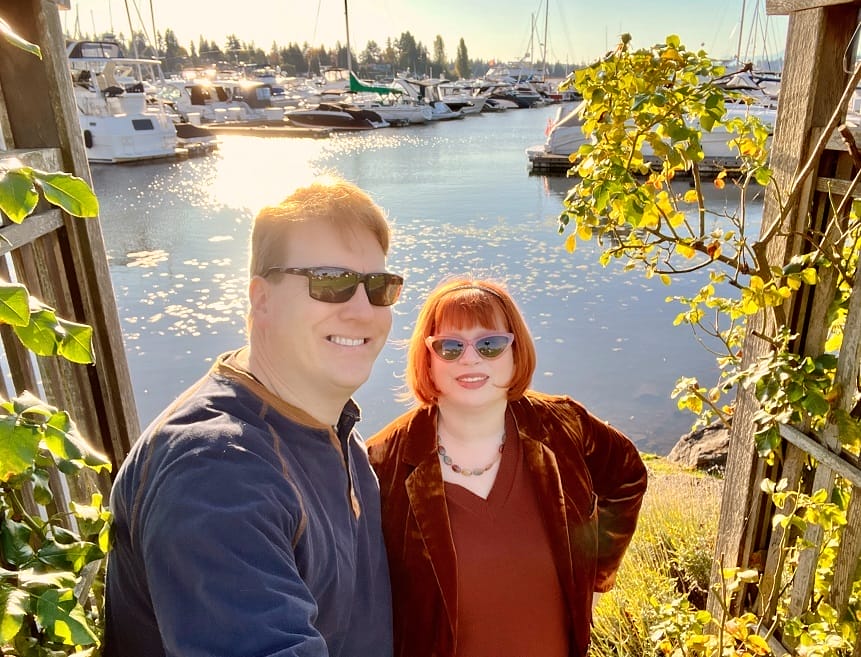
I myself have been struggling with a low mood, so I’ve been consciously trying to do things that usually cheer me up this time of year—visiting pumpkin farms, reading seasonal poetry and fiction, spending time with supportive people, and helping others. We brought some pumpkins and wine (Woodinville’s most popular exports) to my little brother for his new rental home housewarming, and it was great to see my little brother and his wife (who had been living much farther away, requiring a ferry ride and a rather temperamental and prone-to-surprise closures bridge). I spent time with the local farmers, talking strategy, flower planting, even poetry. Anyway, if you are feeling powerless in the face of evil, hatred, and doom, you’re not the only one. So, even though the pictures often show me smiling—like the ones below—just remember we are all doing the best we can.
-

- Pumpkins, pumpkins, pumpkins!
-

- At McMurtrey’s Farm
-

- in Kirkland, in sunshine
-

- at JB Family Pumpkin Farm


Bonjour Witches! At Chateau Ste Michele
Spooky Poem
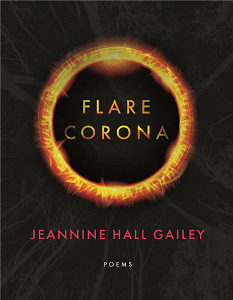
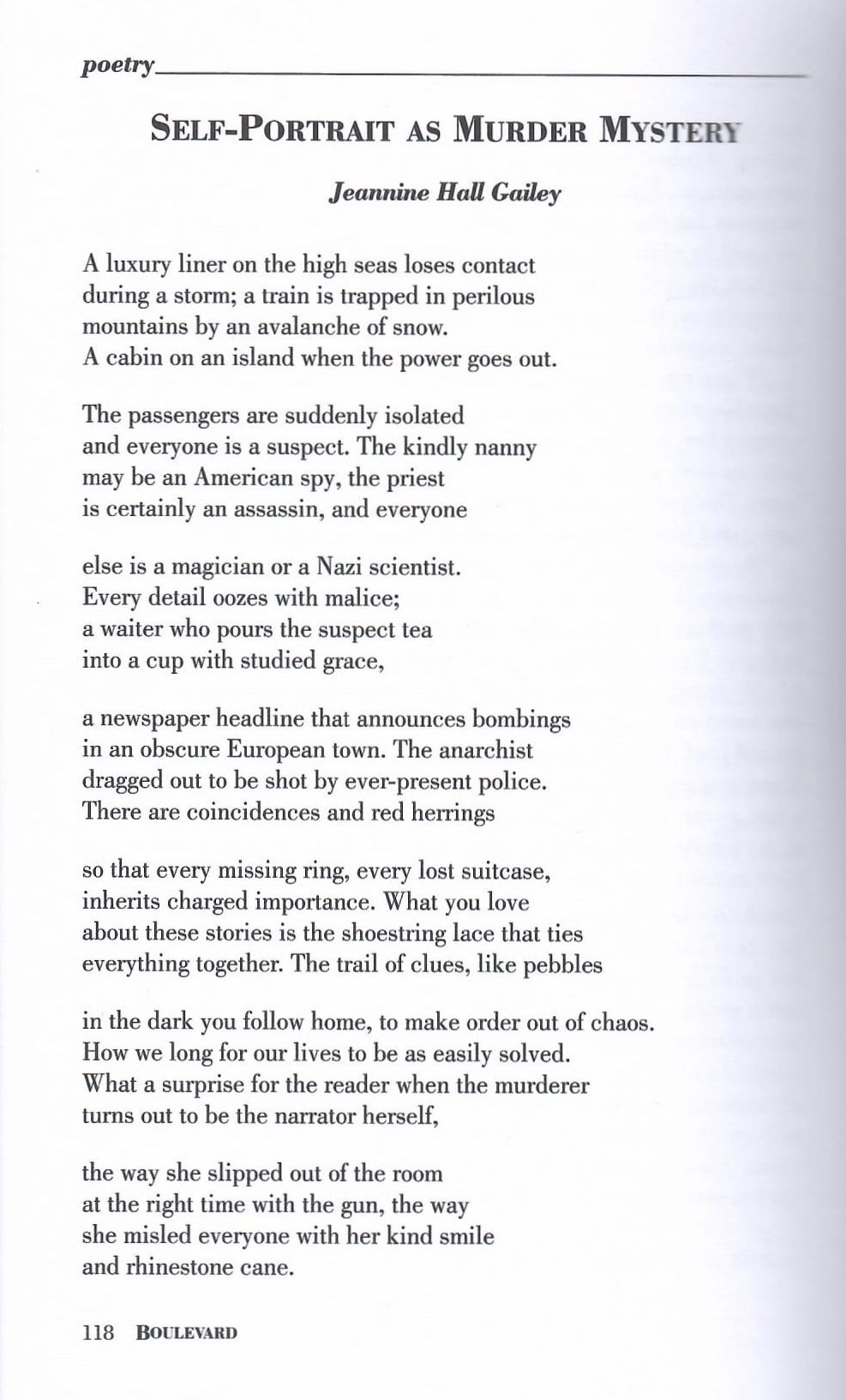
I have a tradition of posting a spooky poem from my latest book on Halloween, and even though Flare, Corona is a little less horror-and-speculative centric than some of my other books, there are some Halloween-y poems in there. Here’s one of them, originally published in Boulevard: “Self-Portrait as Murder Mystery:”
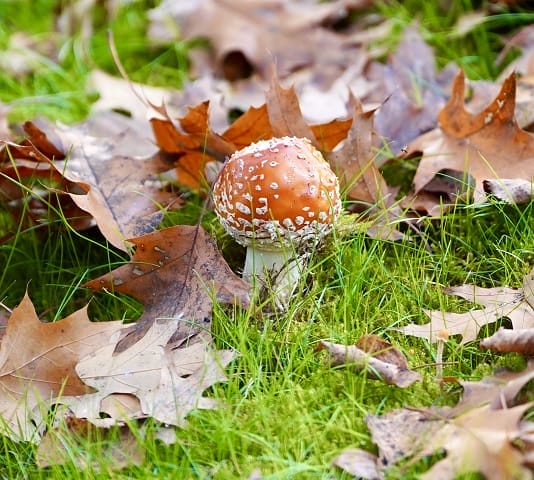
Fly Agaric mushroom with fall leaves
Spooky October Reading
What do you like reading in October? Our Read-Between-the-Wines book club read Osamu Dazai’s Blue Bamboo short story collection this October, and the discussion was great – and a lot of people got into the spirit and came in costume, so that was fun. I’ve also been reading Agatha Christie’s Halloween Party, the slightly-more-disturbing basis for the new movie Haunting in Venice, Kiki’s Delivery Service by Eiko Kadono, the coming-of-age story about a young witch that was the basis of Miyazaki’s movie of the same name (very Halloween-appropriate for kids!) I also read Louise Glück’s books in honor of her recent passing, including American Originality: Essays in Poetry, and my first editions of House on Marshland and Meadowlands (which will be the book club’s November read!) House on Marshland includes one of the greatest Gluck poems of all time, “Gretel in Darkness,” also great reading for Halloween.

Book Club at J. Bookwalters
I’m still wrapping my head around the lyric essay and so re-reading some books of lyric essays in my collection, including Jenny Offill’s Department of Speculation and her newer Weather.
I’m doing a reading on Zoom for Speculative Sundays, on November 19 at 7-8 PM, and you can sign up for free tickets here: Speculative Sundays Poetry Reading Series presents Jeanine Hall Gailey Tickets, Sun, Nov 19, 2023 at 7:00 PM | Eventbrite

Spooky Orange Halloween Hunter’s Moon
Happy Halloween, My Friends
So, take care of yourselves and have yourself a joyous Halloween, Day of the Dead, All Saints Day, or Samhain. Take time to look at the moon, maybe eat some candy, read something spooky.
A New Review of Flare in New Pages, Pumpkins and Typewriters, Halloween Mystery Parties and Thoughts on the Lyric Essay
- At October 23, 2023
- By Jeannine Gailey
- In Blog
- 1

Typewriter with pumpkins
Typewriters, Pumpkin Farms, and Spooky Stories
This week has been busy—a new review of Flare, Corona in New Pages, a few visits to pumpkin farms, a Halloween Mystery night at a local winery, and a re-reading of Osamu Dazai’s Blue Bamboo for the October winery book club and reading up on the lyric essay form. Plus, typewriters in the wild has a new location—growing in a pumpkin field!
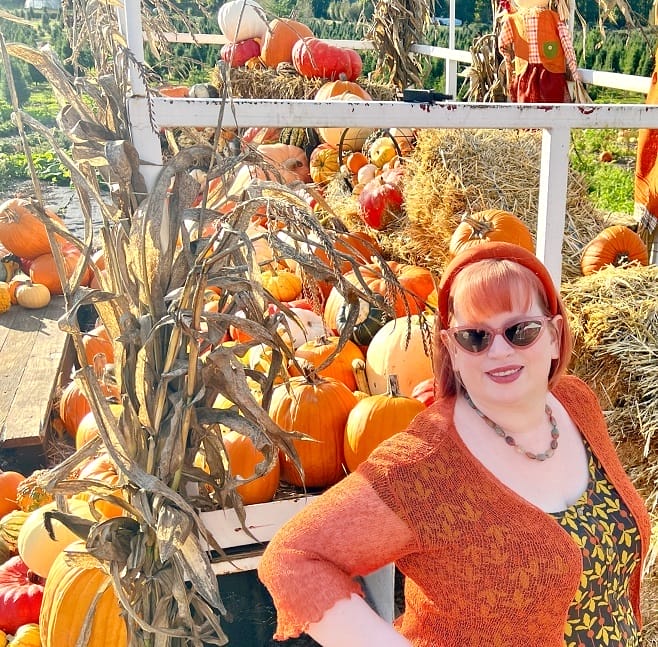
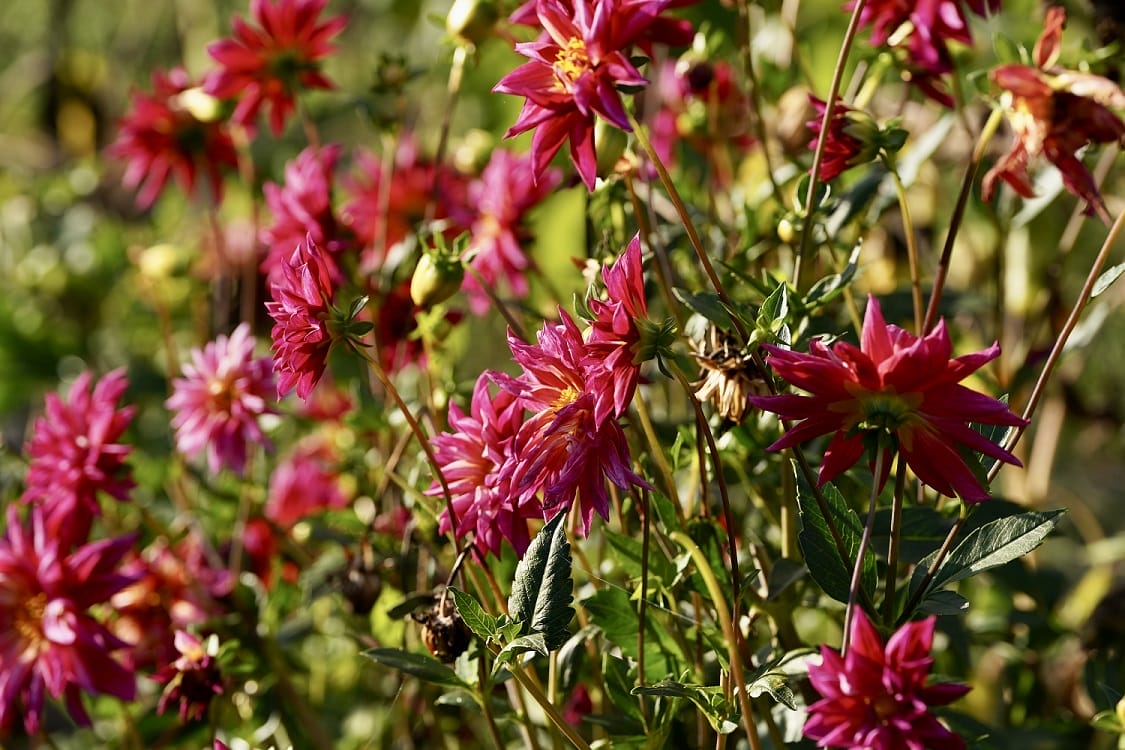
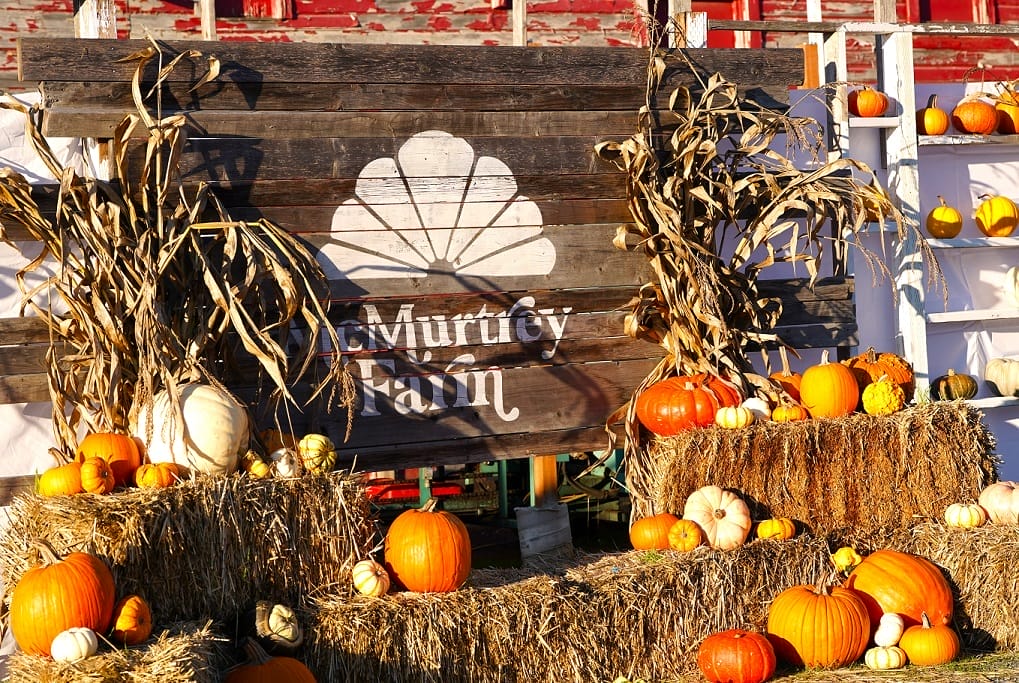
I have been practicing with my new camera some more, this time with typewriters. I love being around farms and farmers—and they are usually people I feel so comfortable with—that sometimes, even with my MS/health stuff, I wonder if I missed my calling to become a farmer. This week, the kind farmer at McMurtrey’s Pumpkin and Tree farm invited us to take home handfuls of dahlias and tomatoes. We talked about how to keep our apple trees from catching diseases and how to rotate dahlias and pumpkins. I know people say Seattle has a reputation for unfriendliness, but you won’t find it among Woodinville farmers or farm workers. A few pictures from that farm and backyard below.
-

- Typewriter growing in a pumpkin patch

-

- me with pumpkins and born
-

- McMurtrey secret koi pond

-
- purple dahlias at mcMurtrey’s pumpkin farm
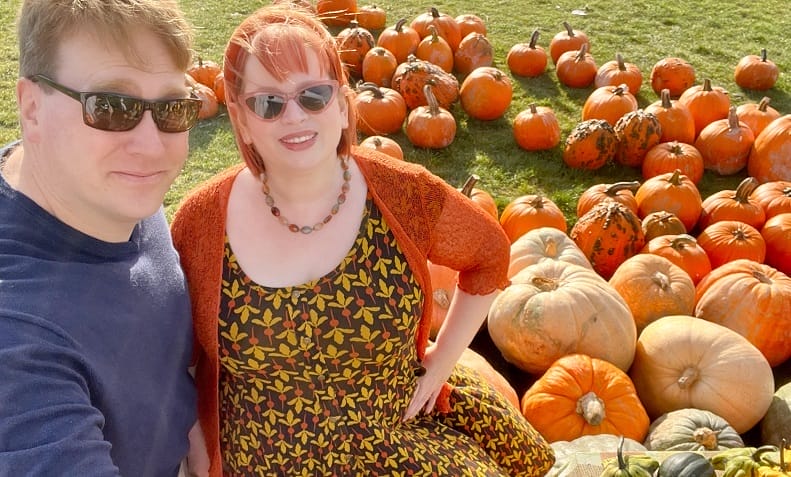
Glenn and I at JB Growers Pumpkin Farm
A Review of Flare, Corona in New Pages
I was pleased and surprised—I’m always surprised to get a new review of a book that’s been out more than six months, but I’m also grateful. Here’s the link: Book Review :: Flare, Corona by Jeannine Hall Galley – NewPages.com
And a sneak peek of the review below:

 Halloween Mystery Parties
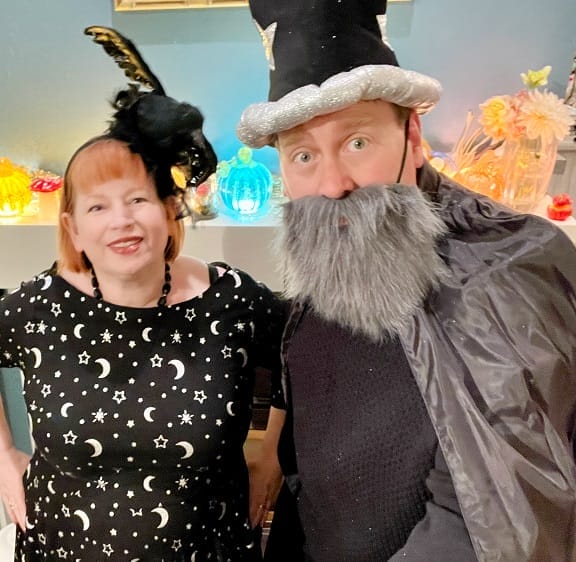
This weekend we did a Halloween mystery night (themed: witches and druids) at J. Bookwalter’s Winery in Woodinville (hence the pictures to the left: that is a raven on my head, thanks). A lot of the party was set outside and it was a nice night, thankfully, so we didn’t have to worry too much about the dreaded covid.
It was not a typical murder-mystery scenario—more like a sort of goth video game? I’m very competitive so I was sad we didn’t win, but the team that won had five people who were way more committed than we were—costume wise AND game-wise. Anyway, it was a good way to shake up our routine date night and it was very on theme for the week before Halloween.
Lyric Essays and More
One of the things I’m working on now is an essay, ironically, on lyric essays, so I’ve been doing some research, reading some books of lyric essays. It’s weird for me, since I’ve been a journalist, a technical writer, an ad copywriter, a book reviewer, and a poet, but until the pandemic I didn’t write personal essays or lyric essays. Even though I’ve had some essays published I certainly don’t consider myself any kind of expert.
But on Facebook I put up a query and got some really interesting answers, from people who definitely are more qualified than me. And as a poet I’m attracted to the idea of an essay that isn’t necessarily: theme, point, point, conclusion. That allows for leaps, long parentheticals and ellipses – in short, essays that mimic poetry in a lot of ways.
Here’s a little fun read if you, like me, are interested in creative nonfiction and how to define the lyric essay: my friend and fellow poet Julie Marie Wade’s lyric essay on defining the lyric essay—funny and useful: What’s Missing Here? A Fragmentary, Lyric Essay About Fragmentary, Lyric Essays ‹ Literary Hub (lithub.com)
Anyway, my research has led me to think about experimenting more with the form. Next week, I promise to post a more spooky post with spooky poems!
A Week of Solar Eclipse, Loss and Sadness, a Tribute to Louise Glück, and Some Thoughts on Poetry, Academia, Ambition and the Establishment
- At October 16, 2023
- By Jeannine Gailey
- In Blog
- 1
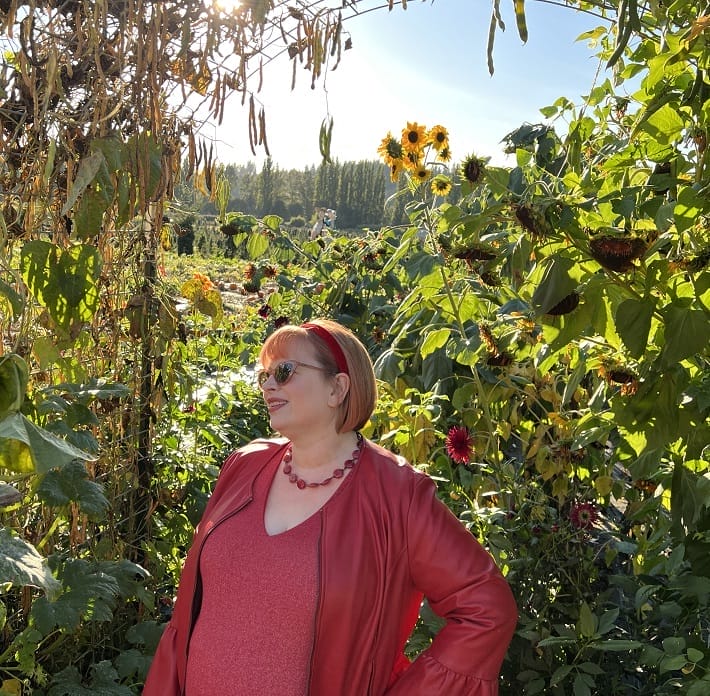
Me in an enchanted secret garden
Pictures of Fall and a Post about Solar Eclipses, Sadness, and Poetry
I have some gorgeous pictures from a beautiful bluebird day earlier this week when we managed to get out into nature and visit some local farms, but right now I’ve been sick in bed all weekend, a rainy weekend that reminded me that the end of the year is coming faster than I expected.
I’ve been feeling down this week—no wonder, with the endless tragic stream from Israel and Gaza, with the death of one of my favorite poets, and the shorter days and illness, it’s hard to post a chipper post. I can at least report I’ve been practicing my bird shots on the new camera, so hopefully the new ones will be better.
Tribute (of sorts) to Louise Glück
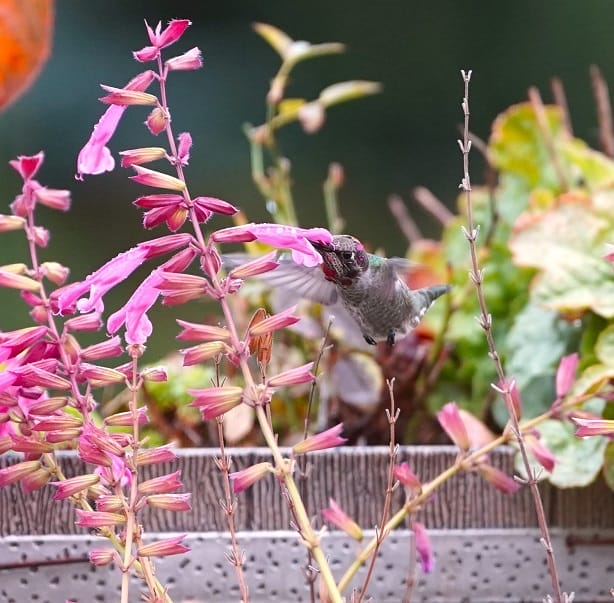
Anna’s hummingbird with pink salvia
Louise Glück passed away this week, which made me remember all my encounters with one of my favorite contemporary poets. Not a warm and fuzzy person, she was stylish and her writing always had an edge. I call her one of my “villainess” writing heroes—along with Margaret Atwood—who eschew easy, nice, characters and conversations in their writing. They deny the need for women to be, “nice”.
When I was an undergrad at UC (Ohio), she came to visit, and I got to ask her a question. It was just after Wild Iris was published and won the Pulitzer, and I asked her if H.D. was an influence. She replied she had no idea who that was—and to this day, I don’t know if she was messing with me or she genuinely had no idea about one of more famous female modernists who wrote arresting poems about flowers. Maybe? That night she gave a reading from some new poems from Meadowlands, and I brought my little brother who was in high school, and some of his friends —their first poetry reading. He went right up to her after the reading, and, knowing the way to a girl’s heart, complimented her shoes—which were excellent, and she giggled like a schoolgirl and could not have appeared more delighted. And my brother and his friends—all of them looking faintly menacing—could not have had a better time. At a poetry reading!
As I started to try to define who I was a poet, I know that certain female poets—of the dead, Emily D., of course, Edna St. Vincent Millay, Sylvia Plath—but Gluck, Atwood, Lucille Clifton, Rita Dove, Denise Duhamel, and Dorianne Laux – they became like a power source that I could go back to, to read and energize. I only got a few chances to see Atwood, got to have dinner with Denise on one of her trips to Seattle, and worked with Dorianne while she was at Pacific U but I saw Glück read probably five times, which is amazing, considering we live on different coasts and I don’t think she loved travelling or giving readings, especially as she got older. (I missed Lucille Clifton as she had to cancel her Seattle trip due to one of her final chemo appointments. I’m still sorry about that. I wish I could have told her all her work meant to me.) Anyway, here is one of my favorite poems of hers, perfect for spooky October with its hauntings: “Gretel in Darkness,” from her second book, House on Marshland, published when I was two years old.
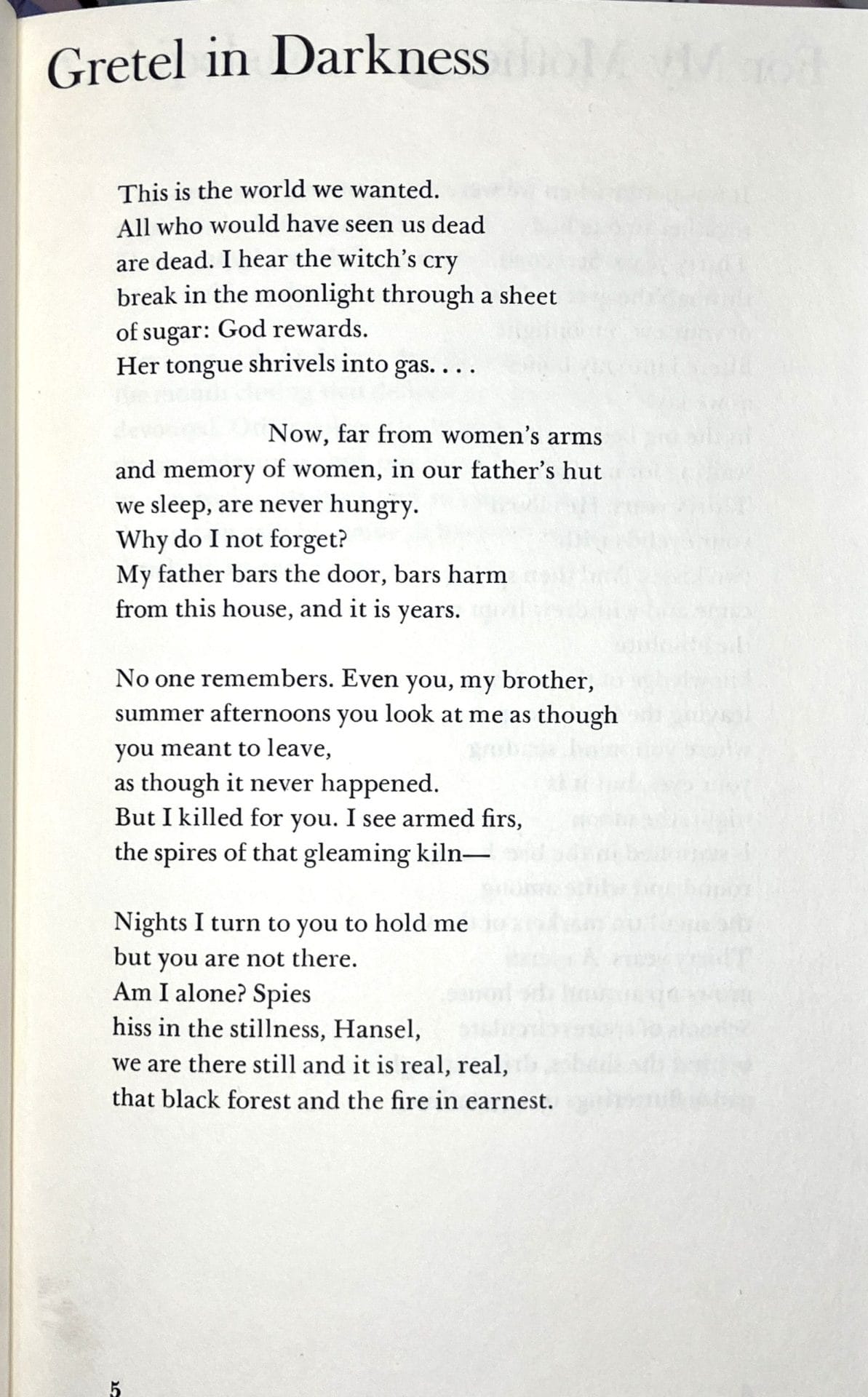
Is October a Season of Mourning?
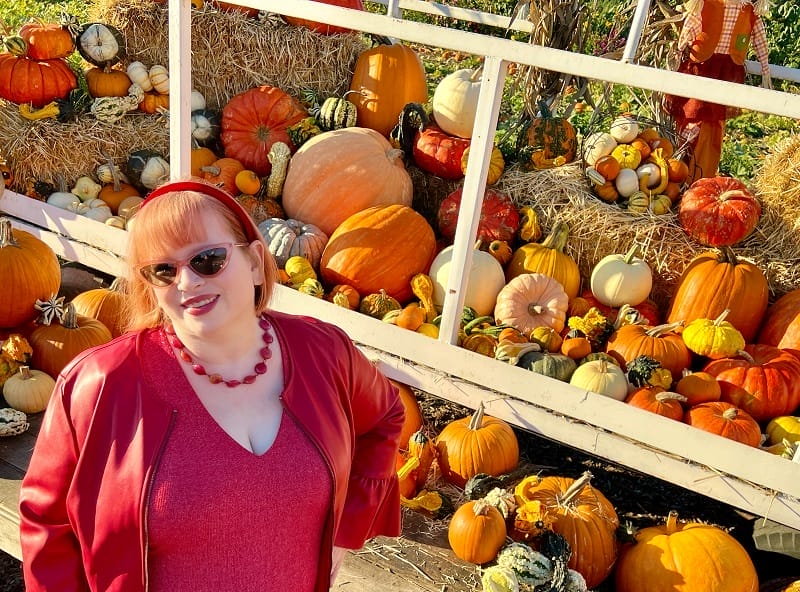
Me at McMurtrey’s Pumpkin Farm early this week
Louise certainly thought it was—so many poems about October and death and mourning, come to think of it. Since Glück was my father’s age, it brought to mind sad thoughts about my parents’ mortality. The news has been relentlessly grim—even SNL, John Oliver and Colbert had to make pre-show statements to comment on the horror before trying to make us laugh about other subjects, just like, as I remember, it was in the aftermath of 9/11.
There is something about the solar eclipse with ring of fire, the new moon this week, that also made me think of portents. In the Northwest, the sunlight becomes weaker, the night coming surprisingly fast. And yes, it’s cold, flu (and covid, still) season, which means I caught something and am probably not in the best shape to be writing anything deep and meaningful, even though I want to.
Some Thoughts on Poetry, Academia, Ambition and the Establishment
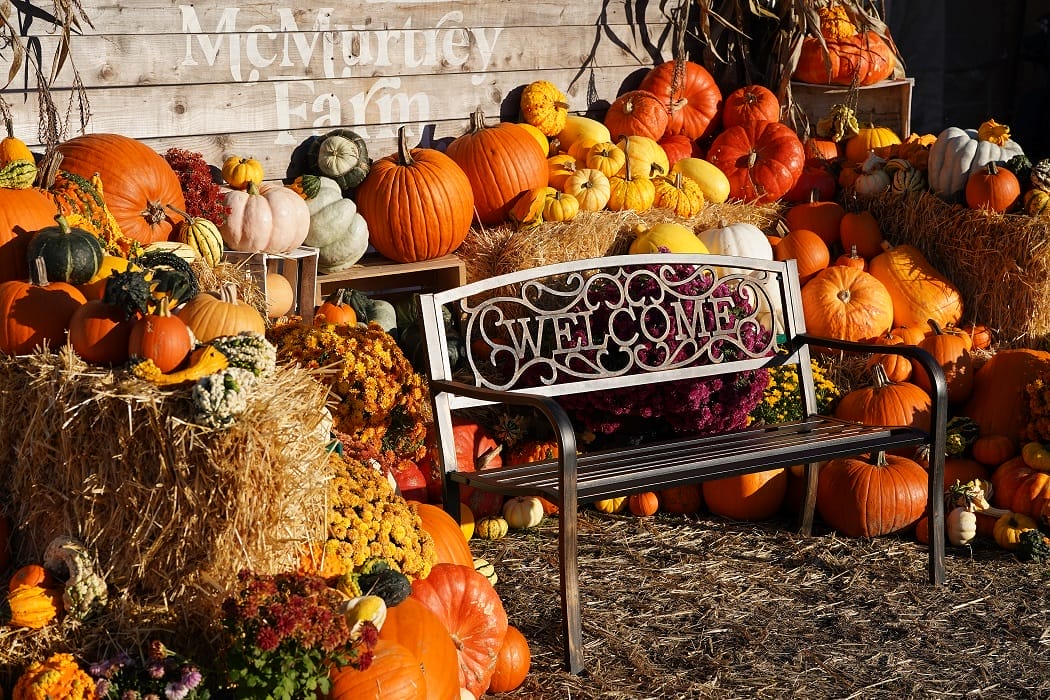
Pumpkins and a welcome bench
I had been thinking of eliminating this blog—or moving to Substack—when I ran into a couple of posts that made me grateful for this longform, easy-to-find-and-read, method of thinking and communicating that’s outside the gates of Facebook, Twitter, or academic publishing.
The first was by my friend Lesley Wheeler—about the closing of Gettysburg Review, the waning of literary criticism and of the English Department—and indeed, academe in general. The other was my blog-gatherer-extraordinaire and haiku poet Dave Bonta, who wrote a post about ambition, poetry, and careers. Both posts are thought-provoking and worth your time. One thing that Dave mentions that I have found to be true is that poetry in academia is a colder, meaner sort of world than say, the speculative poetry world, the horror poetry world, or, in Dave’s experience, the haiku/haibun community. When Lesley talks about the closing and narrowing of academia’s support of poetry, literature, liberal arts in general, I am reminded of all my reading on Cold War Culture than indicated the American government was secretly propping up—and using for propaganda—many of the big journals we have come to think of as “permanent” features. Between the fifties and the eighties, the intelligence community thought it was important to show that America had its own artists that could compete with Russia’s—and, of course, they wanted to follow any potential communists into artistic enclaves. So, they gave money to Kenyon Review, Poetry, Paris Review, they helped publish books like Dr. Zhivago. Now, anti-intellectualism is king in politics—the government’s no longer interested in being a patron of the arts. Lesley mentions the patronage that most artists need to live as disappearing—but maybe it was always a sort of mirage. How many people in my generation could even procure a tenure track job in English Literature or Creative Writing? And the chances for the people younger than me, even less. Last week I talked about money and the awards system—a sort of insider trading post about how being wealthy enables you to get more money from grants, awards, and fellowships because you know some sort of secret password—whether it’s a certain college degree, championship by a wealthy mentor, or other. These things feel forbidden to talk about in the poetry world—but I feel it’s also important to point out that the poetry world is as corrupt and given to influence as any field, but also has its havens from that corruption if you look for them.
 As a writer, I’ve always felt like an outsider—first, being a woman who did not come (or marry into) money, now, being a disabled and chronically ill woman who still has not won the lottery—and part of me feels like I’ve been beating a fist on the big blank walls of poetry institutions for more than twenty years. I’ve written hundreds of reviews, too, a world that is apparently disappearing, the idea of literary criticism itself being valuable enough to be paid for—was that a waste of time? Dave’s comments on ambitions as it refers to writing—not career—are important, as they get to a truth that might be more important now as it feels so many things we value are decaying before our eyes—that creating art is beautiful and worthwhile, and so is making art accessible to everyone, not just an elite few.
In the Days After the Solar Eclipse
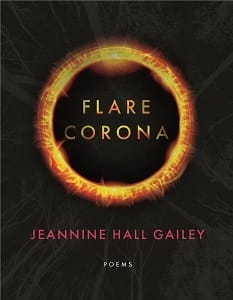
So, in these days after the solar eclipse with ring of fire, a photograph of which became the book cover art rendering for Flare, Corona, my latest book, I hope you are creating, celebrating creating, reading and making art for art’s sake. I don’t wish you to ignore the ugliness of the world—we cannot, even if we want to—but I hope for this particular solar weather to invoke some kind of peace, healing, and hope around the world, and in me and you as well.
I just walked out in my front yard – I couldn’t sleep after sleeping most of the day, and it felt cooler outside—and as I admired Glenn’s work with the Halloween decorations, I heard two owls hooting (pretty close to me) and a coyote. At first, I thought we had spooky sound effects on, but no! It was nature’s own spooky sound effects. Maybe that is the blessing of the world at night—so peaceful, always a little beautiful and a little threatening.
October or August? More Pumpkin Farms, A Review of Lessons in Chemistry on Apple TV+, Talking a Little about Prizes (and Why You Shouldn’t Feel Bad if You Don’t Win)
- At October 09, 2023
- By Jeannine Gailey
- In Blog
- 4

Dragon and pumpkins at Molbak’s
October or August? More Pumpkin Farms, Prizes, and Shows for Smart Girls
This week it has felt more like August than October, with sunny skies and temps up to 80°F! Glenn and I took advantage of the sun to make the rounds of our favorite pumpkin farms and gardens, Glenn got lots of outdoor projects done, and I walked so much every day my feet hurt (for an MS person, this is a good thing! It means you’re walking more and your legs aren’t giving out before your feet!)
It was also a week where many awards including the Nobel Prize and the MacArthur Genius Grant, were announced, so if you’re feeling like an also-ran, I’ve got a little bit to say about that later on in the post.
I also had a sneak peek at the new Apple TV show Lessons in Chemistry, based on the book about a frustrated female chemist who becomes a cooking show star. My review later in the post too.
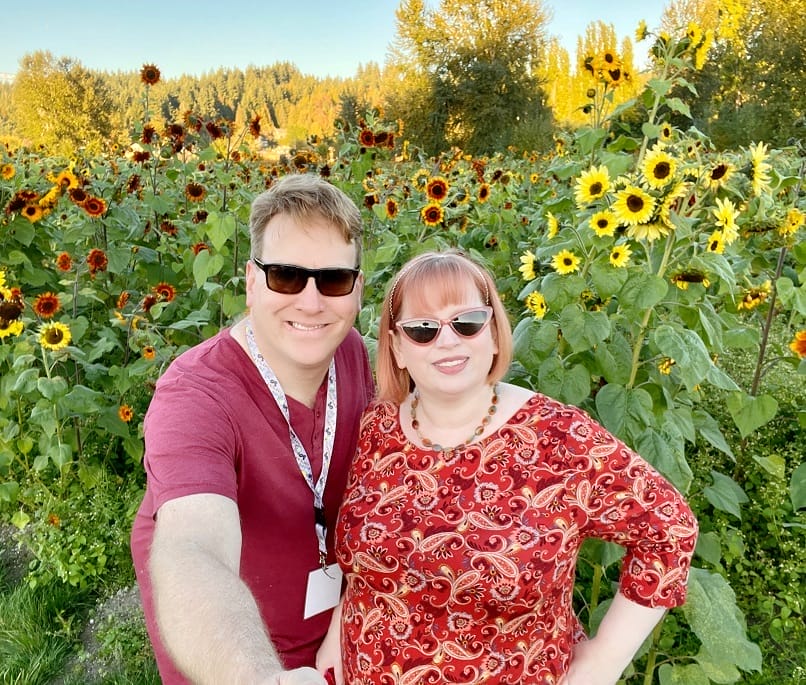
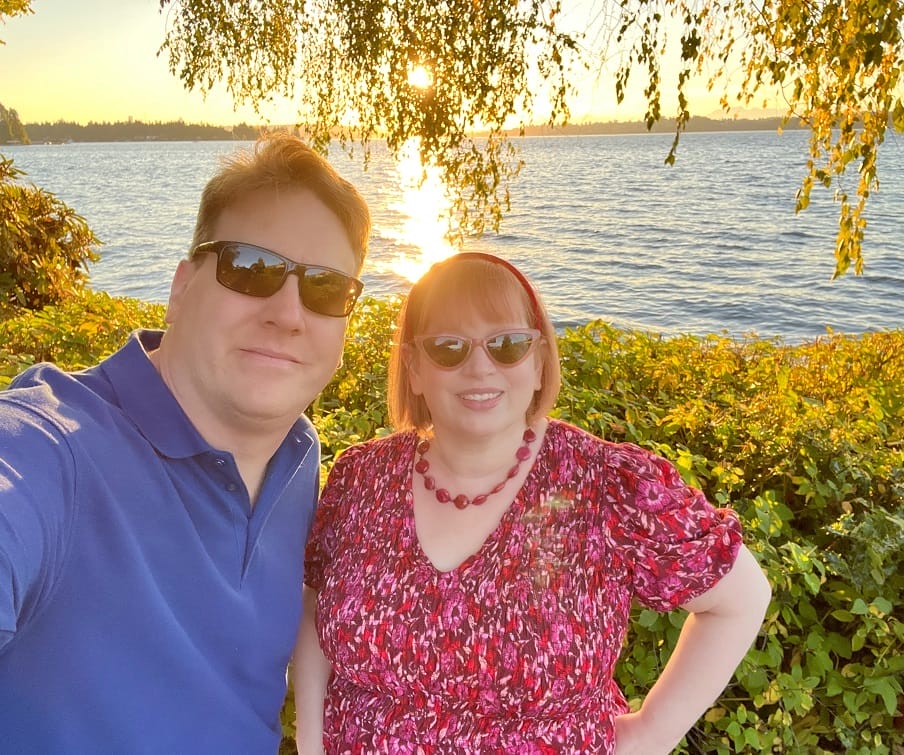
For now, pictures of sunsets in Kirkland, Bob’s Corn & Pumpkin farm near Maltby (also a purveyor of excellent Pazazz apples, which are like even better Honeycrisps), and of course our local garden center and JB Growers Pumpkin Farm and Sunflower maze:
-

- Pumpkin Farms in Maltby

-

- Sunet in Kirkland

-
- Sunflower Maze in Woodinivlle
-

- Kirkland sunset with Glenn and me
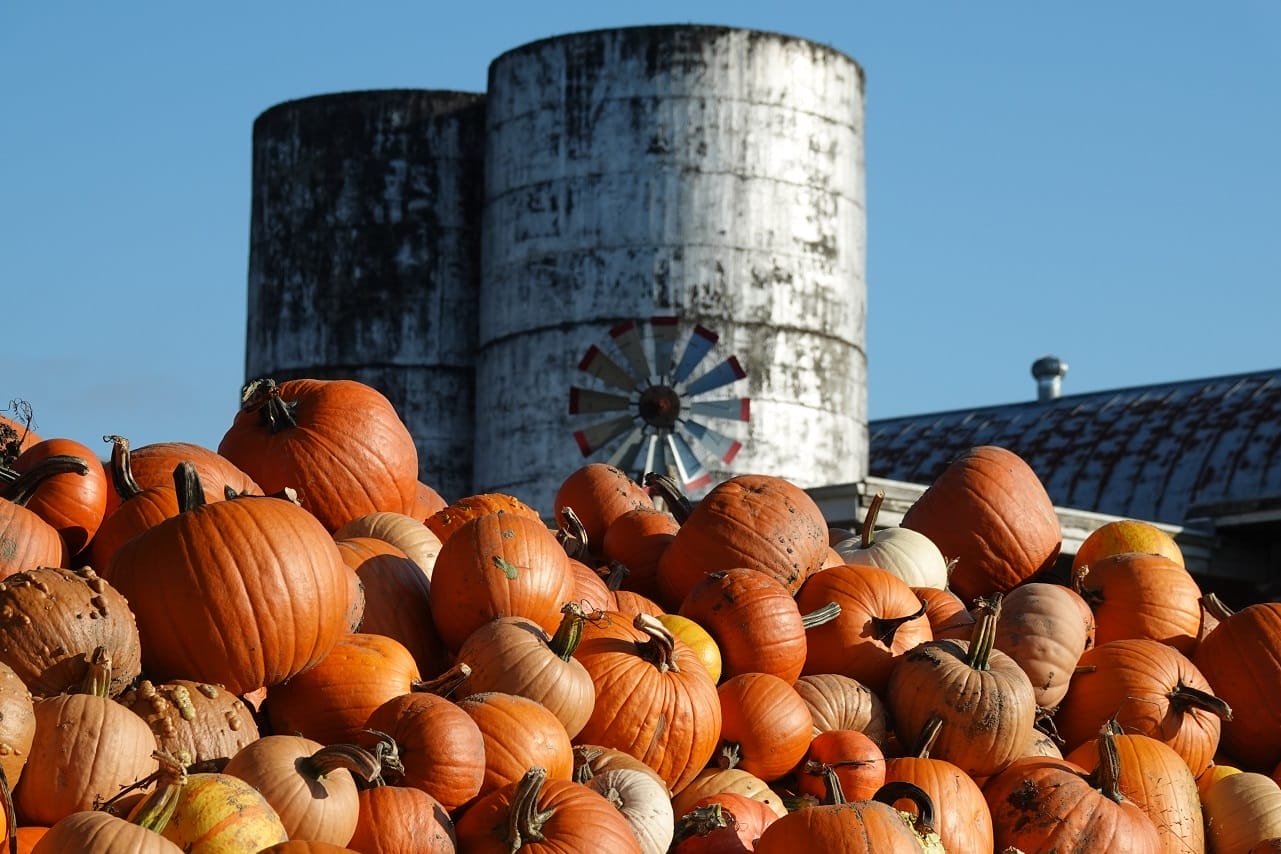
Pumpkins and silo at Bob’s
A Brief Review from a Sneak Peek of the First Episode of Lessons in Chemistry on AppleTV+
I got a chance to see an early sneak peek of the first episode of the show based on book (which I really liked) Lessons in Chemistry. The intro’s music and art are pretty cool (doodling DNA with perky fifties tunes and colors), and Brie Larson does a fairly good job of the put-upon smart girl chemist who turns into a television cooking personality. This book covers a lot of the same ground that our recent Woodinville book club pick, When Women Were Dragons, sans dragons. It’s a very satisfying watch for any girl who’s been underappreciated and underestimated in the sciences (says the girl with the pre-med biology degree) and reminded me of several incidences that happened to me in the eighties and nineties. My question is, are there enough STEM girls to sustain an audience for the show? My husband, who has a degree in chemical engineering and is also a wonderful cook, was impressed, but thought the science parts weren’t hard-core enough. I will definitely tune in to watch it again on its real debut date. There have been several shows, including Dickenson (about the life of Emily Dickinson) that AppleTV+ gave a home to that maybe mainstream outlets wouldn’t have. This might be one of them. I wish the show luck.

Antique tractor wheel and pumpkins at Bob’s
And Speaking of Underappreciated…Talking about Awards and When You Don’t Win Them
This week might have felt discouraging to you (or encouraging, depending on your POV) with the announcements of the Nobel Prize and the MacArthur Genius Grants. Now, these are some of the biggest prizes, so you might not have been disappointed (see a hilarious discussion of a suicide attempt by Steve Corell in Little Miss Sunshine related to the MacArthur…I remember being the only one laughing in the theater during the joke, but I bet you guys would get it).
So…you’re a writer of a certain age, who has written a certain number of books, and after, say, twenty years, you’re still not getting major attention for your work. Read: you are not winning the big money, big attention awards.
But think about this: the people that are winning the big awards are not winning by accident, and maybe not even because of their talent. Someone out there has done a PR campaign, gotten to have lunch with the right people in charge, went to the right schools, got the right mentors. And a LOT of that has to do with class and with money. No disrespect to people that win big, but if you look behind the curtains, you’ll notice that a LOT of them have a LOT of money. It costs something to put yourself out there in the best light—either money from your publisher, or your family, or from powerful mentors at powerful institutions. Does this mean, shocking intake of breath, literature is not always a meritocracy? I’m just going to suggest that those of you struggling with not getting a major award should realize that there are aspects of the world of grants, fellowships, prestige awards that are not going to be…completely in your control. I wish people would talk about this stuff a little bit more and be more honest about what it takes to really make it as a poet. For instance, Louise Gluck inherited a fortune from her father’s invention of the X-acto knife. Merwin inherited a ton of money, TS Eliot married it (and then put his wife in an institution so he could access that money faster). No shade on any of those poets (well, maybe a little at Eliot—what a jerk!), but they were able to be influential poets because they had talent but also because they had money.
Not to say every poet with money becomes influential, or every prize winner has secret millions (but you’d be surprised how many do!) I wasn’t born with money, I didn’t marry into money, and I didn’t win the lottery, so I didn’t go to the fanciest schools and I’m still paying off student loans from my less-fancy schools. Does that mean I will live a writer’s life without recognition, awards, fellowships, etc? Not necessarily. I do know people who are just like me who have succeeded in making the “big time.” And Sylvia Plath won the Pulitzer…but not ’til many years after her death. So perhaps we all—writers, scientists, people in competitive fields like composing or physics—feel that we are being looked over, but continue with our work nonetheless. I remember my father, a robotics scientist, was always depressed a week or so after learning he didn’t win an NSF (the science equivalent of the NEA) grant. I later had a college roommate who was one of the people who screened NSF applications, who told me it was a depressing job because there were so many great applicants, but she could only choose a very small number to win. I think about both those things a lot.
So instead, let’s write not to win awards but because you like creating, and make sure not to let a rejection or someone else getting a prize you wanted ruin even a week of your life. After all, outside are pumpkin farms and sunsets and turning leaves. There are wars going on, yes, but there are also kind people doing kind things for other people. When we have wildfire smoke here, sometimes all you can do is notice the wildfires. When you feel a depression because you’ve worked many years and have little to show for it, it can feel like that wildfire smoke—it’s all you see and feel. Humans are built to notice danger, so we also have a negativity bias towards remembering our rejections, our failures, the things we haven’t gotten, the fires and wars going on around us, rather than our successes, our loved ones, evidence of kindness and the beautiful things in the world.

At Molbak’s, a fall scene
I didn’t mean to go a little dark here at the end. I may have been feeling a little down lately about my own writing and the writing life in general, questioning my purpose and my future. The new war that just sparked overnight, an earthquake close to here, all things that unsettle and upend. Though I love fall, the season does tend to make me more of a ruminant—what am I doing with my life? Where am I heading? I did want to reassure other writers that the reasons that they might be overlooked are more complex than they imagine, and money is such a taboo topic among writers, when it really shouldn’t be. I hope you feel a little better and wishing you a happy October week ahead. If you’re lucky enough to have some sunshine, I wish you pumpkin farms and a bunch of really good apples.
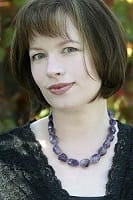 Jeannine Hall Gailey served as the second Poet Laureate of Redmond, Washington and the author of Becoming the Villainess, She Returns to the Floating World, Unexplained Fevers, The Robot Scientist’s Daughter, and winner of the Moon City Press Book Prize and SFPA’s Elgin Award, Field Guide to the End of the World. Her latest, Flare, Corona from BOA Editions, was a finalist for the Washington State Book Award. She’s also the author of PR for Poets, a Guidebook to Publicity and Marketing. Her work has been featured on NPR’s The Writer’s Almanac, Verse Daily and The Year’s Best Fantasy and Horror. Her poems have appeared in The American Poetry Review, Poetry, and JAMA.